
PPSR Check: The Complete Australian Guide for Safe Used-Car Buying
Last Updated: January 23, 2026
Next Review: June 2026
Overview
When purchasing a second-hand vehicle in Australia, buyers should utilize the Personal Property Securities Register (PPSR Check) to uncover potential hidden risks. For a small two-dollar fee, this official government search reveals if a car has outstanding debt, has been reported stolen, or was previously written off due to severe damage. Because financial security interests remain attached to the asset rather than the owner, failing to check this register could lead to the repossession of the vehicle even after payment. Additionally, the search identifies dangerous safety recalls, such as those involving Takata airbags, ensuring the driver's physical protection. Experts recommend performing this check using the Vehicle Identification Number (VIN) immediately before finalizing a sale to ensure the most current data is reviewed. This simple administrative step provides a legal certificate of the results, offering essential peace of mind and financial security for private automotive transactions.
Don't Let Hidden Finance Cost You Thousands
Before you pay for this car, check if it has outstanding loans that could lead to repossession. Australian law lets lenders take the car even if you bought it in good faith.
A PPSR check is a search of the Personal Property Securities Register to see if there is finance or a security interest registered over a vehicle. The Personal Property Securities Register is an initiative of the Australian government designed to protect consumers during transactions involving personal property.
The PPSR is a national online register of security interests in personal property, operated by the Australian Financial Security Authority (AFSA) under the Personal Property Securities Act 2009 (Cth). The main objectives of the PPSR system are to consolidate security interest information, reduce risks for buyers, and provide a transparent process for registering and searching interests in personal property. For buyers of used cars, utes, motorcycles, caravans and boats, a PPSR check helps protect consumers from hidden finance and repossession risk. Running this quick, low-cost search before you pay can prevent you from losing thousands of dollars on a vehicle that still has money owing.
What is a PPSR Check?
The Personal Property Securities Register (PPSR) is Australia’s single national online register of security interests in personal property. Personal property includes movable assets like motor vehicles, motorcycles, boats, caravans, trailers, machinery and equipment. It does not include land or buildings.
The PPSR is operated by the Australian Financial Security Authority (AFSA) under the Personal Property Securities Act 2009 (Cth). It commenced operations on 30 January 2012, replacing multiple older state-based systems that had operated separately across NSW, Victoria, Queensland and other states.
A PPSR check (sometimes called a PPSR search) on a vehicle is a search of this register, usually done by entering the Vehicle Identification Number (VIN). The search reveals whether any party—such as a bank, finance company, lender or business—has a registered security interest or finance owing over that vehicle.
What the PPSR Replaced
Before the PPSR existed, each state and territory ran its own encumbrance register. NSW had REVS (Register of Encumbered Vehicle Securities), Victoria had the Register of Encumbrances, and Queensland had a similar system. These were separate databases that did not communicate with each other.
This created problems for buyers. A car financed in Queensland might not show up on a NSW check if the buyer didn’t know to search multiple registers. The PPSR solved this by consolidating everything into one national system.
Since January 2012, all PPSR registrations are recorded in a single database covering every Australian state and territory. One VIN-based search now reveals security interests regardless of where the vehicle was originally financed or registered.
Why This Matters for Buyers
Under Australian law, a properly registered security interest can survive a change of ownership. This means a lender’s rights can continue even after the car is sold to a new buyer.
If a previous owner has an outstanding loan secured against the vehicle and the lender has registered that security interest on the PPSR, the lender retains legal priority. They can seek to repossess the vehicle from whoever currently has it—even if that person paid the seller in full and had no knowledge of the debt.
Without a PPSR check, a buyer may hand over $15,000, $25,000 or more for a car that a finance company can still legally repossess if the original debt is not repaid. The buyer loses both the car and the money.
PPSR vs Other Vehicle Checks
A PPSR check is specifically about finance and security interests. It does not replace other important checks:
| Check Type | What It Covers |
|---|---|
| PPSR check | Registered security interests and finance owing |
| State rego check | Registration status, expiry, basic vehicle data |
| Written-off check | Statutory and repairable write-off status |
| Stolen check | Whether the vehicle is recorded as stolen |
| Mechanical inspection | Physical condition, safety, hidden damage |
Each check serves a different purpose. A PPSR check is one of the core building blocks of due diligence on any used vehicle in Australia, but it works best alongside these other checks rather than as a replacement for them.
Why Do a PPSR Check Before You Buy?
Security interests registered on the PPSR “follow the asset.” This means the debt and the lender’s rights are attached to the vehicle itself, not just to the person who took out the loan.
When someone finances a car, the lender typically registers a security interest on the PPSR. This registration gives the lender priority over other claims. If the borrower sells the car without paying out the loan, that security interest remains registered—and the lender’s rights travel with the vehicle to whoever buys it next.
What Can Happen Without a PPSR Check
Here’s the scenario that catches buyers off guard: you find a car you like, the seller seems genuine, you pay in full, and you drive away happy. Three months later, a finance company contacts you. The previous owner stopped making loan repayments. The finance company has a registered security interest, and they’re exercising their right to repossess.
You’ve lost the car. You’ve lost your money. Your only recourse is against the seller—who may have disappeared, have no assets, or simply refuse to pay.
This is not a rare or theoretical risk. It happens to Australian buyers every year, particularly in private sales where there are fewer protections than buying from a licensed dealer.
Key Reasons to Run a PPSR Check
Before paying for any second hand car, ute, SUV, 4WD, motorcycle, caravan, camper trailer or boat in Australia, a PPSR check helps you:
- Avoid buying a vehicle with money still owing. Registered security interests or loans can result in repossession, even if you paid the seller in full.
- Avoid ownership disputes and competing claims. Multiple lenders or creditors may have interests in the same vehicle, creating complex legal situations.
- Verify the seller’s claims. Sellers may honestly believe their loan is paid out when it isn’t. The PPSR shows the actual registered status, not what someone thinks or says.
- Reduce risk in private sales. Buying from Gumtree, Facebook Marketplace or classifieds means fewer statutory protections than dealer purchases. A PPSR check adds a layer of verification.
- Add protection even at dealers. While dealers have legal obligations, running your own check on higher-value vehicles in the $18,000–$25,000+ range gives you independent confirmation.
Real Scenarios Where PPSR Checks Matter
A family in Melbourne is looking at a used SUV in the $22,000 range from a private seller. Before paying, they run a PPSR check and confirm no finance is owing. They proceed with confidence and keep the PPSR certificate with their purchase documents.
A tradesperson in Brisbane finds a used ute for around $15,000 on Facebook Marketplace. The PPSR check reveals an active security interest from a major bank. The seller claims the loan is “nearly paid off” but can’t provide proof of discharge. The buyer walks away and avoids a potential repossession nightmare.
A buyer in Perth is considering a $9,000 motorbike from a private seller. The PPSR search shows multiple active security interests from two different finance companies. This suggests a complex financial situation with the current owner. The buyer decides the risk is too high and looks elsewhere.
The Value Comparison
The government PPSR search fee is currently around $2. Even bundled third-party reports with additional checks typically cost between $5 and $20.
Compare that to the potential loss. If you buy an encumbered vehicle and it gets repossessed, you could lose $10,000, $20,000, $30,000 or more—the entire purchase price plus any registration, insurance and repair costs you’ve already paid.
Spending a few dollars to protect against losing tens of thousands is straightforward risk management.
Even honest sellers can be mistaken about their finance status. They may genuinely believe their loan was paid out, or they may not realise a security interest remains registered. Relying solely on a seller’s word, without checking the official register, leaves you exposed.
A PPSR check is a low-cost, high-impact step that can significantly reduce your financial risk when buying any used vehicle.
What Does a PPSR Check Show on a Vehicle?
A PPSR check returns an official search result or PPSR certificate containing structured fields about any registered security interests over the vehicle. Understanding what these fields mean helps you interpret the results correctly.
Core PPSR Result Fields
When you receive a PPSR report or certificate, you’ll typically see the following information:
Secured party – This is the lender, finance company or credit provider who holds the security interest. It might be a bank, a car finance company, or another business that has lent money secured against the vehicle.
Debtor (or grantor) – This is the person or business who owes the money and granted the security interest. Often, this is the current or previous owner of the vehicle.
Registration number – Each security interest has a unique PPSR registration reference number. This identifies the specific registration on the national register.
Collateral class – This indicates the type of personal property. For vehicles, it will typically show “motor vehicle” or a similar classification.
Registration start and end dates – The start date shows when the security interest was registered. The end date (if set) shows when the registration is scheduled to expire.
Status – This is critical. An “active” status means the security interest is currently registered. A “discharged” or “removed” status means it has been released and no longer affects the vehicle.
Collateral description – This includes the VIN, make, model, and sometimes the year and body type. This helps you confirm the search relates to the correct vehicle.
How to Use This Information
When reviewing your PPSR search results:
- Confirm the VIN matches exactly. Compare the VIN on the certificate to the VIN on the actual vehicle (compliance plate, windscreen) and the registration papers. A mismatch means the search may relate to a different vehicle entirely.
- Check that make, model and description align. If the certificate says “Toyota Hilux” but you’re looking at a Ford Ranger, something is wrong.
- Focus on active security interests. An active status means there is current finance or a security claim over the vehicle. This is the most important finding for a buyer.
- Understand discharged interests. A discharged or historical entry shows past finance that has been paid out. It no longer affects the title. However, verify the status is genuinely “discharged” rather than just “pending” or ambiguous.
What a PPSR Check Does Not Show
A PPSR check has specific limitations. It does not directly show:
- Full accident or repair history
- Odometer readings or tampering
- Detailed written-off damage descriptions
- Service and maintenance records
- Whether the vehicle has been re registered in a different state
Many third-party vehicle history reports bundle the official PPSR data with additional information from other sources:
- National Written-Off Vehicle Register (WOVR) status
- National stolen status from police databases
- Registration confirmation
- Sometimes odometer history and valuation data
These are valuable additions, but they come from separate databases, not the core PPSR. When you need to know specifically about finance and security interests registered on the property securities register PPSR, the PPSR check is your primary tool.
Interpreting Common Outcomes
“No security interests registered” – This means no active PPSR encumbrances exist at the time of the search. The vehicle appears clear from a finance perspective.
“1 active security interest” with a bank or finance company listed – This likely means there is a current loan. Do not complete your purchase until this interest is discharged and confirmed clear on a fresh PPSR search.
Multiple active entries – This is a more complex situation. It could mean several lenders have claims, or there may be previous errors that haven’t been corrected. Walking away or seeking professional advice is often the safer choice.
The PPSR result is one piece of the due-diligence puzzle. Read it together with physical inspection, rego checks and the vehicle’s history from other sources to build a complete picture.
How to Do a PPSR Check in Australia (Step-by-Step)
Running a PPSR check is quick, online, and can be done from any state or territory in just a few minutes. You don’t need any special software or accounts—just the vehicle’s VIN and a payment method.
Where to Find the VIN
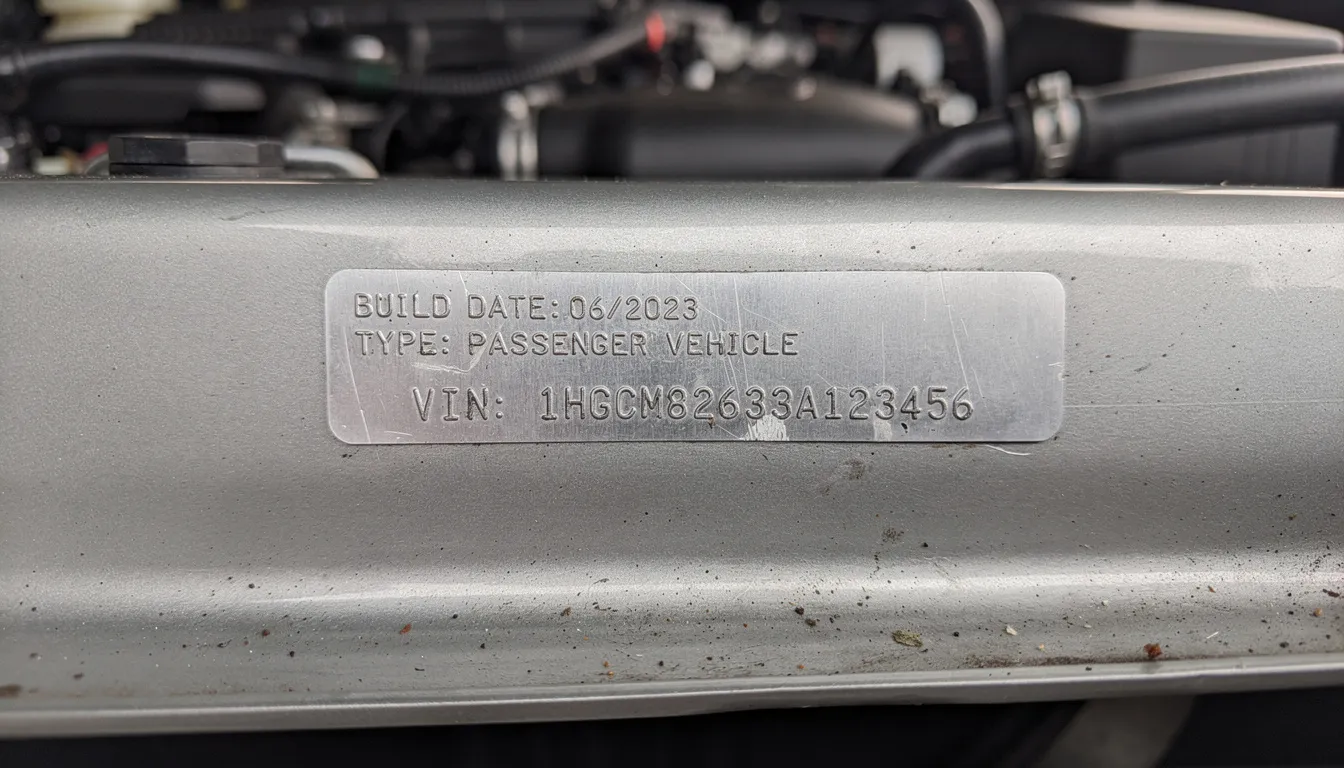
The Vehicle Identification Number (VIN) is a unique 17-character code assigned to each vehicle. On a typical passenger vehicle, you can find it in several places:
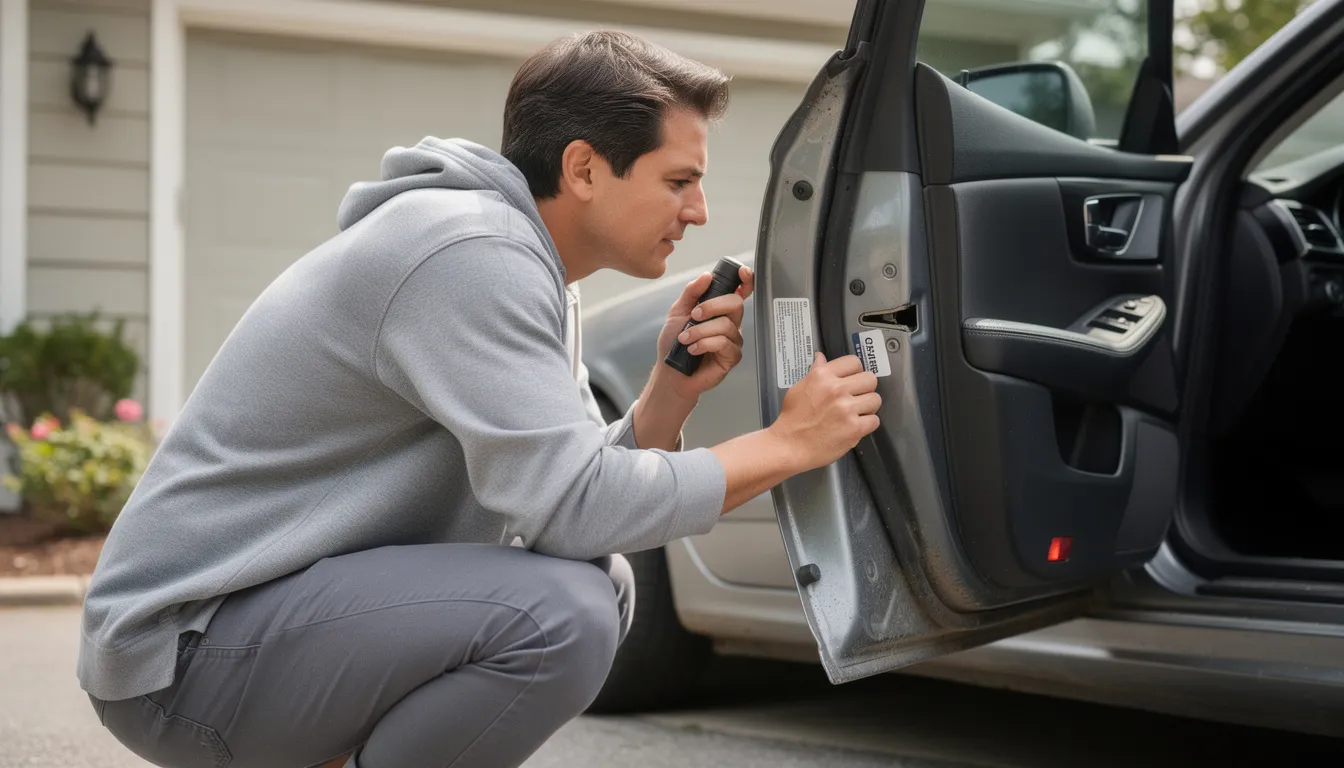
- Compliance plate – Usually located in the engine bay or on the door jamb (the frame visible when you open the driver’s door). This is the most reliable location.
- Windscreen – Many vehicles have a small metal plate visible through the lower corner of the windscreen on the driver’s side.
- Registration papers – Your state’s registration certificate or renewal notice will include the VIN.
- Insurance documents and service books – These often record the VIN as well.
Always rely on the physical VIN stamped on the vehicle first. Use paperwork only to cross-check. If the VIN on the car doesn’t match the VIN on the papers, stop and investigate before proceeding.
For motorcycles, the VIN or chassis number is typically stamped on the steering head or frame. For trailers, caravans and boats, look for compliance plates or chassis/HIN (Hull Identification Number) plates.
Two Main Ways to Run a PPSR Check
1. Official government PPSR/AFSA site
The official site (ppsr.gov.au) is operated by the Australian Financial Security Authority. Searching here gives you the raw PPSR certificate at the lowest cost. This is the legally recognised record of the PPSR status.
2. Third-party providers
Reputable third-party services access the same official PPSR data but present it in more user-friendly formats. Some bundle the PPSR search with other checks (written-off, stolen, rego) into a single comprehensive report. These cost more but can save time if you want multiple checks in one purchase.
Step-by-Step Process
Step 1: Gather the vehicle details
Collect the VIN (or chassis number for older vehicles). Have the registration number and state handy as a cross-reference, though VIN-based searches are more reliable than plate-based searches.
Step 2: Choose your search method
Decide whether you want the official government PPSR certificate only, or a bundled report from a third-party provider that includes additional data.
Step 3: Enter the VIN carefully
Type the VIN exactly as it appears on the vehicle. Double-check every character. One wrong digit means you’re checking a completely different vehicle, and your search result will be meaningless for the car you’re actually buying.
Step 4: Confirm and pay
Review the search details before submitting. The government PPSR fee is currently around $2 per search. Third-party reports vary but typically range from $5 to $20 depending on what’s included.
Step 5: Receive your certificate or report
Results are usually delivered instantly or within minutes. You’ll receive a PDF that you can download, save and print.
Step 6: Check the vehicle details on the certificate
Verify that the VIN, make, model and description on the certificate match the actual vehicle. If they don’t match, the search is invalid for your purposes.
Step 7: Review the security interest status
Look for any active security interests. A clear result means no current encumbrances. An active interest means finance is still owing—do not proceed until it’s resolved.
The Importance of Accuracy
A VIN is 17 characters long, mixing letters and numbers. Typing “O” instead of “0” or “I” instead of “1” can result in searching the wrong vehicle entirely. You’d have a clear certificate for a car you’re not even buying, while the actual car might have $20,000 in finance owing.
Never rely solely on registration plate numbers for a PPSR check. Plates can be swapped, transferred or cloned. The VIN is stamped into the vehicle’s structure and is the correct identifier for PPSR purposes.
Timing Your PPSR Check
A PPSR check is a snapshot in time. It shows the register’s status at the exact moment you searched. New registrations can be added at any time.
Run your PPSR check as close as possible to when you intend to pay. Ideally, do it on the same day you plan to hand over the money.
If your settlement is delayed by several days or weeks, consider running a fresh PPSR check shortly before payment to confirm nothing has changed.
Interpreting Your Results
Clear result: Keep the certificate with your purchase records. It serves as proof you did your due diligence and confirms the vehicle was clear of registered interests at that time.
Active security interest: Do not proceed to full payment. Ask the seller to pay out the loan and have the lender discharge the registration. Run a new PPSR search to confirm the interest has been removed before you pay.
Seller claims “it’s paid out but not released yet”: This is a common situation, but you remain at risk until the PPSR status is updated. Options include:
-
Waiting until the discharge appears on a fresh PPSR search
-
Using a lender payout and simultaneous settlement arrangement
-
Seeking professional advice for high-value purchases or complex situations
The same PPSR search process works nationally. Whether the vehicle is in NSW, VIC, QLD, WA, SA, TAS, ACT or NT, one VIN-based search on the national PPSR covers it.
PPSR Check Costs and Pricing in Australia
PPSR checks in Australia are designed to be low cost so consumers can use them routinely when buying used vehicles. The small fee is deliberately accessible—protecting consumers from hidden finance shouldn’t require a large upfront expense.
Official Government PPSR Search
An official PPSR search through the government/AFSA channel has a small, fixed fee per search. Currently, this is around $2 per search, including the PPSR certificate.
This official search certificate is the legally recognised record of the PPSR status at the exact date and time of the search. Courts, insurers and lenders rely on these certificates as evidence of the register’s status.
Government charges may be updated from time to time, so check the current fee on the official PPSR website before searching.
Third-Party Provider Pricing
Third-party services offer different options at varying price points:
|
Service Type |
Typical Price Range |
What's Included |
|---|---|---|
|
PPSR-only (third-party) |
$3–$6 |
Official PPSR data in a more readable format |
|
Basic vehicle history |
$5–$12 |
PPSR + written-off + stolen checks |
|
Comprehensive report |
$12–$20 |
PPSR + written-off + stolen + rego + odometer + valuation |
These prices are indicative and vary between providers. The key point is that even the most comprehensive bundles remain modest compared to the value of the vehicle you’re checking.
Comparing Value
Official PPSR only ($2): The lowest cost option. Best if you specifically need legal proof about finance and security interests registered on the vehicle. The format is straightforward but less “user-friendly” than third-party reports.
Third-party PPSR-only ($3–$6): Similar core data to the government search, but often presented in a cleaner format that’s easier to read and store. A small premium for convenience.
Bundled reports ($12–$20): Higher upfront price, but combines several checks into one purchase. You get PPSR, written-off status, stolen checks, and sometimes rego and odometer data in a single report. This can save time and potentially money compared with ordering each check separately.
The Real Cost Comparison
Consider what you’re protecting against:
- Buying a vehicle that is repossessed because of undisclosed finance: potential loss of $10,000–$50,000+
- Discovering hidden write-off damage after purchase: repair costs, reduced resale value, safety concerns
- Facing stolen-property disputes: legal costs, loss of vehicle
Against these risks, even a $20 comprehensive report is negligible.
For most private used-car purchases in the $8,000–$30,000 range, spending a small additional amount on a bundled report alongside the PPSR check is a reasonable insurance-like expense. You’re not just paying for data—you’re paying for peace of mind and protection.
A Note on “Free” PPSR Checks
You may see marketing around “free PPSR checks” from various providers. Be aware that any genuine PPSR search that includes the official certificate must cover the underlying government fee somewhere in the process. “Free” typically means the cost is bundled into other things or you’re not getting the full official certificate.
For complete protection, ensure you receive an actual PPSR certificate or report that you can keep as evidence of your search.

PPSR Check Coverage by State and Territory
The PPSR is a single national register. There is only one Personal Property Securities Register covering all of Australia, regardless of which state or territory the vehicle is currently in, was purchased in, or was originally financed in.
One Search Covers All of Australia
A single PPSR check covers vehicles from:
- New South Wales (NSW)
- Victoria (VIC)
- Queensland (QLD)
- Western Australia (WA)
- South Australia (SA)
- Tasmania (TAS)
- Australian Capital Territory (ACT)
- Northern Territory (NT)
You do not need separate searches for different states. One VIN-based search reveals any security interests registered nationally, regardless of the vehicle’s history across state borders.
|
State/Territory |
Covered by National PPSR? |
|---|---|
|
New South Wales (NSW) |
Yes |
|
Victoria (VIC) |
Yes |
|
Queensland (QLD) |
Yes |
|
Western Australia (WA) |
Yes |
|
South Australia (SA) |
Yes |
|
Tasmania (TAS) |
Yes |
|
Australian Capital Territory (ACT) |
Yes |
|
Northern Territory (NT) |
Yes |
What the PPSR Replaced
Before the PPSR commenced in January 2012, each state and territory operated its own encumbrance register:
- NSW: REVS (Register of Encumbered Vehicle Securities)
- Victoria: Register of Encumbrances
- Queensland: REVS QLD
- Other states: Various motor vehicle securities registers
These state registers have been phased out. All their data was migrated to the national PPSR. Today, there is no reason to search old state-based systems—the PPSR is the single source for security interest information on personal property across Australia.
PPSR vs State Road Authorities
The PPSR is separate from your state or territory’s road and transport authority:
|
Body |
What They Handle |
|---|---|
|
Transport for NSW |
Registration, plates, CTP, ownership transfers, roadworthiness |
|
VicRoads (Department of Transport VIC) |
Registration, plates, licence, roadworthy certificates |
|
Queensland TMR |
Registration, plates, safety certificates |
|
Department of Transport WA |
Registration, plates, vehicle inspections |
|
Service SA |
Registration, plates, vehicle transfers |
|
Transport Tasmania |
Registration, plates, vehicle standards |
|
Access Canberra (ACT) |
Registration, plates, road safety |
|
NT Department of Infrastructure |
Registration, plates, roadworthiness |
These state bodies manage the operational side of vehicle ownership. The PPSR specifically records security interests in personal property and finance—it’s a national register under federal law, not a state transport system.
Do Both Checks
For complete due diligence, buyers should generally do:
- A PPSR check – National, covers finance and security interests
- A state-based rego check – For registration expiry, written-off/stolen status (where available through state services), and basic vehicle data
Some third-party providers bundle both into a single report, which can be convenient.
Business and Commercial Use
The PPSR is also widely used for business and commercial assets across Australia—fleets, equipment, trailers, agricultural machinery, and other things beyond consumer vehicles. The national coverage is particularly important when assets move across state borders, which is common for transport companies, contractors and equipment financiers.
For vehicle buyers, the key takeaway is simple: one correct VIN-based search on the national PPSR is sufficient from a finance and security-interest perspective. You do not need separate state searches.
Common PPSR Questions from Australian Car Buyers
Is a PPSR check legally required before buying a car?
No, it is not legally compulsory for private buyers. However, it is strongly recommended as a best-practice protection step. Under Australian law, a lender’s registered security interest can survive a change of ownership, so checking the PPSR before paying is the most reliable way to protect yourself. For complex or high-value purchases, consider consulting a lawyer or finance professional.
How long is a PPSR search valid?
A PPSR search is a snapshot valid only for the exact date and time shown on the certificate. The register can change at any time as new interests are registered or existing ones are discharged. If there is a delay between your search and your payment, consider running a fresh PPSR check closer to settlement.
Do I need separate PPSR checks for each state?
No. The PPSR is a national register covering all Australian states and territories. One VIN-based search reveals security interests regardless of where the vehicle was financed or registered. There is no separate PPSR for NSW, VIC, QLD or any other state.
Does a clear PPSR mean the car has never been in an accident?
No. A clear PPSR result only means there are no registered security interests at the time of the search. Accident and repair history are not recorded on the PPSR. For that information, you need separate checks such as written-off status reports and a professional mechanical inspection.
Can I use a PPSR check to see if a car is stolen?
Partially. Some third-party PPSR reports bundle stolen status data from police databases or NEVDIS (National Exchange of Vehicle and Driver Information System). However, the core PPSR register focuses on security interests, not stolen vehicles. For complete stolen-vehicle verification, use official stolen status checks alongside your PPSR search.
What should I do if the PPSR shows an active security interest?
Do not complete the purchase until the interest is discharged and confirmed on a new PPSR search. Ask the seller to provide evidence that the loan has been paid out. Consider asking for a release letter from the lender. If the situation is complex or involves a large amount of money, seek professional advice before proceeding.
Can I rely on a PPSR search the seller did last week?
It’s safer to run your own current PPSR search. The register can change at any time, and you need proof of the status right before you pay. A seller’s older search may also be for a different vehicle, or may not show the complete picture. Your own certificate protects you.
What if the PPSR report does not match the VIN on the car?
Do not proceed. The search may have been conducted on a completely different vehicle. Confirm the correct VIN by physically checking the compliance plate and matching it to the registration papers. Run a new search with the correct VIN before making any payment.
Does PPSR cover motorbikes, caravans, boats and trailers?
Yes. The PPSR covers a wide range of serial-numbered personal property, including motorcycles, caravans, camper trailers, boats (via Hull Identification Number), and many other assets. The search process is similar—enter the VIN, chassis number or HIN as appropriate.
Is a PPSR check the same as a REVS check?
REVS was the old state-based system. The PPSR replaced REVS and other state encumbrance registers nationwide in 2012. A PPSR check is the modern equivalent. There is no longer a separate REVS system—everything is now on the national PPSR.
Can a PPSR check tell me who legally owns the car?
No. The PPSR shows security interests, not legal ownership. Ownership is generally established through registration documents, receipts, and the sale contract. Look at all documents together to verify you’re dealing with the legitimate owner.
What if the seller says “the loan is paid out but PPSR is not updated yet”?
Until the PPSR shows the discharge, you remain exposed. Ask the seller to obtain a release letter from the lender confirming the debt is cleared. Consider structuring settlement so the lender is paid directly from the sale proceeds. For high-value purchases, seek professional advice on how to complete the transaction safely.
Do dealers have to give me a PPSR report?
Many reputable dealers provide PPSR or vehicle history reports as part of the sale process. However, there is no universal legal requirement. Regardless of what the dealer provides, you can always run your own independent PPSR check for extra peace of mind.
Can I dispute incorrect information on the PPSR?
Errors can sometimes occur. If you believe information on the PPSR is incorrect, the affected parties (usually the grantor/debtor or secured party) can contact AFSA or the secured party to request correction. For buyers, if you discover an error that affects a vehicle you’ve already purchased, seek legal or professional advice on how to resolve the matter.
PPSR Check — The Complete FAQs Guide

PPSR Checks and Safer Used-Car Buying
A PPSR check focuses on finance and security interests—one specific but critical risk when buying a used vehicle. It works best as part of a complete due-diligence process, not as your only check.
The Safer Used-Car Buying Checklist
For comprehensive protection when purchasing any used car, ute, motorcycle, caravan or boat in Australia, consider these key elements:
1. PPSR check for finance and security interests This confirms whether any lender or business has a registered claim over the vehicle. It’s the primary tool for avoiding repossession risk from hidden loans.
2. State registration check Contact your state road authority or use their online services to confirm registration status, expiry date, and basic vehicle data. Some states also provide written-off and stolen status through these channels.
3. Written-off and stolen checks Beyond PPSR, verify the vehicle’s history against the National Written-Off Vehicle Register and stolen-vehicle databases. Many bundled reports include this data. A car that has been written off by an insurer may have structural damage that affects safety and resale value.
4. Independent mechanical inspection Hire a qualified mechanic or use a pre-purchase inspection service to assess the vehicle’s condition. This covers engine, transmission, suspension, brakes, body integrity and hidden mechanical issues that no database can reveal.
5. Service history and logbooks Review available service records to verify kilometres, maintenance schedule and any major repairs. Consistent servicing suggests the car has been looked after. Gaps or inconsistencies warrant questions.
6. Seller identity verification Confirm the seller’s identity matches the name on the registration papers. Ask for photo ID and ensure any finance documents provided appear genuine. If something feels off, trust your instincts.
Why PPSR Checks Matter
A PPSR check:
- Takes only a few minutes online
- Costs very little compared with the price of a used vehicle
- Can prevent serious financial loss if it reveals unexpected encumbrances before money changes hands
- Provides a certificate you can keep as proof of due diligence
The cost-benefit calculation is straightforward. A few dollars now versus potentially losing thousands if the vehicle is encumbered and repossessed.
The Protect-First Mindset
Buying a used car, especially from a private seller, involves inherent risks. The seller may be honest but uninformed about their finance status. The vehicle may have hidden history that doesn’t appear in casual conversation.
Small, methodical checks—PPSR, rego, written-off, stolen, mechanical inspection—reduce your exposure to these risks. None of them guarantee a perfect purchase, but together they significantly improve your odds of buying with confidence and fewer surprises.
Before You Pay
Before you transfer funds for any used car, ute, motorcycle, caravan or boat in Australia:
- Run a PPSR check to confirm there are no registered security interests
- Complete your other due-diligence checks
- Keep the PPSR certificate with your purchase documents
If the PPSR shows active interests, do not proceed until they’re discharged and a fresh search confirms the vehicle is clear. If you’re unable to get clear answers or the situation seems complex, walking away is often the wisest choice.
A PPSR check won’t tell you everything about a car’s history. But it will tell you whether hidden finance could cost you the vehicle and your money. That protection is worth far more than the small fee to supply it.
This guide serves as a central hub for understanding PPSR checks in Australia. For more detailed information on specific topics, explore our guides on PPSR for buyers, PPSR for sellers, PPSR costs explained, understanding your PPSR certificate, and state-specific PPSR information for NSW, VIC, QLD, WA, SA, TAS, ACT and NT.
Check before you buy.